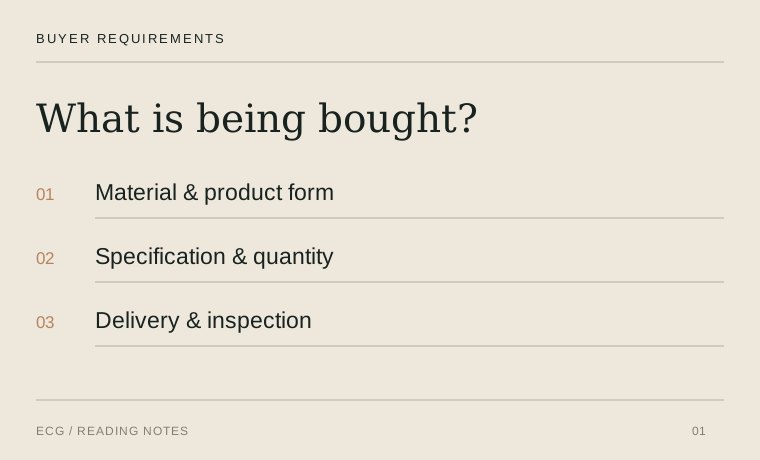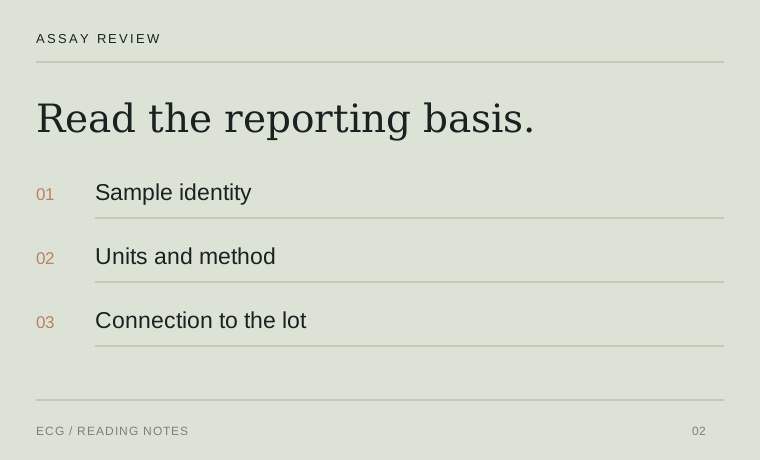
Ask the intended receiver to define its acceptance requirements. Keep the reporting basis, moisture basis and test procedure consistent across the enquiry, assay review and contract.
A buyer enquiring about lithium-bearing material should begin with the receiving plant’s specification. Product form, mineralogy, moisture and contaminants all need to be considered before two offers can be compared.
The U.S. Geological Survey describes lithium uses that include batteries, ceramics and glass. A connection to one of those markets does not establish that a particular rock is suitable for a particular processor. [1]
Obtain the receiver’s requirements
Ask the intended processor to define what it accepts. That conversation should cover product form, the reporting basis for lithium, size distribution, moisture and relevant contaminants. Where mineralogy affects processing, specify the evidence needed to establish it.
Do not label raw material “battery grade” because lithium is used in batteries. The phrase needs a clearly identified product and an applicable specification. An ore offer, a concentrate offer and a refined chemical offer are different commercial propositions.
Make the reporting basis unambiguous
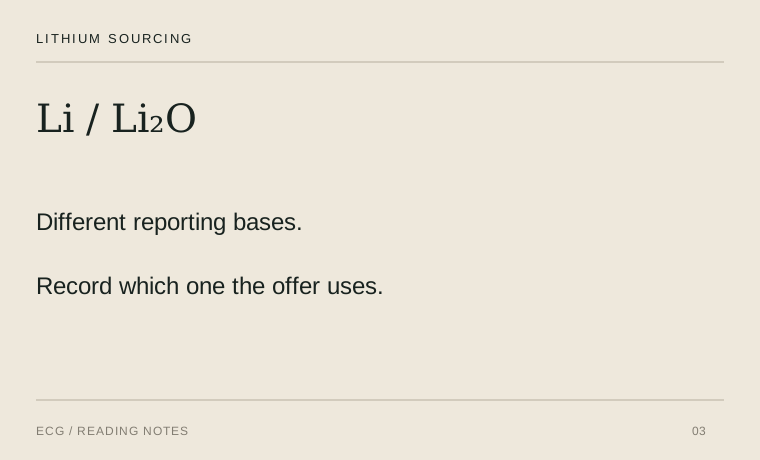
Record whether the result is expressed as elemental lithium or lithium oxide equivalent. Keep that distinction in the enquiry, assay review and contract. A comparison spreadsheet should not mix the two bases in one grade column.
Agree whether the contractual quantity is wet or dry, how moisture will be measured and which result governs settlement. Even when two suppliers quote the same headline grade, differing moisture, particle size or testing arrangements can make the offers unlike one another.
Review the completed processing tests
A chemical assay describes composition within its stated analytical scope. It is not, by itself, a demonstration of recoverability at a commercial plant. Ask whether there has been mineralogical characterisation, beneficiation work or testing by the proposed receiver, and request the complete supporting records.
Separate the supplier’s statements from independently supported findings. When information is preliminary, label it that way. List the unanswered technical questions and assign responsibility for the tests or records needed to resolve them.
Establish repeatability
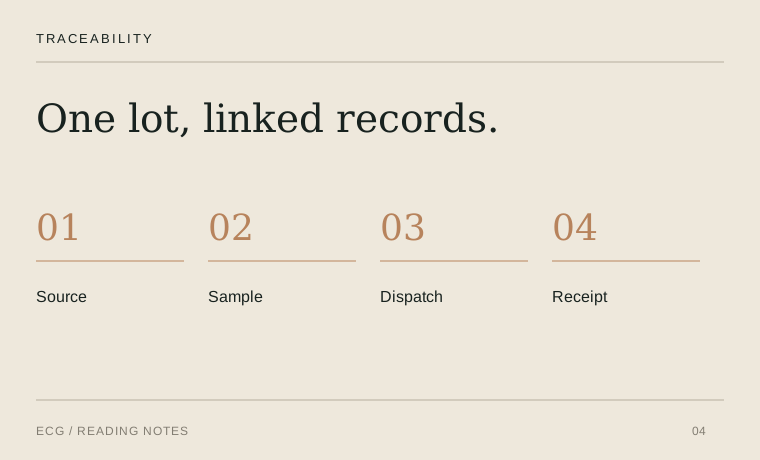
A promising sample does not answer whether later deliveries will behave in the same way. Define the lot represented by the sample and the source of expected subsequent material. Ask how changes in feed, blending or preparation would be identified and communicated.
Representative sampling needs attention throughout that process. SGS identifies sampling and preparation as part of obtaining reliable mineral and metal information. Buyers should have the proposed procedure reviewed for their material and transaction. [2]
Compare the offers
Use a common structure for each offer: product form, specification, moisture basis, quantity, inspection arrangements, delivery point and payment terms. Keep unverified values visibly separate from confirmed ones.
Model the costs that are specific to your transaction, such as preparation, testing, inland movement and freight. Avoid a purchase decision based only on a benchmark for a different product. A concentrate reference price is not automatically a price for unprocessed material.
Agree the trial sequence
An appropriate sequence may be specification review, source and authority checks, sample work, receiver feedback and then a carefully defined commercial trial. The right sequence depends on the project; it should be agreed rather than improvised.
Before commissioning the trial, obtain the receiver’s comments on the available sample information and confirm the conditions for acceptance. Retain those conditions with the quotation and sampling instructions. Any change in source or product preparation should be reviewed against the same specification.
References
The linked sources support the referenced information. Checklists and review questions are ECG’s editorial suggestions. This article provides general information, not advice on a particular transaction. External references do not imply an affiliation or endorsement.
Preparing a purchase or project enquiry?
The resource page includes templates for buyer requirements, source checks and project introductions.
View the templates