Compare the same product and delivery point, with explicit wet or dry quantity units. Keep unresolved quality, cost and payment assumptions visible.
To compare mineral quotations, put the product specification, quantity basis and delivery obligations in the same format. Differences in any of those fields may explain an apparent price advantage.
A comparison should retain the source and date of each input. When a seller has not confirmed a value or obligation, mark it as outstanding rather than filling the gap with an estimate that looks agreed.
Define the product and unit
Separate raw material, concentrate and refined product offers. Record grade, reporting basis, moisture assumptions and relevant physical characteristics. A benchmark for one form of material should not be casually applied to another.
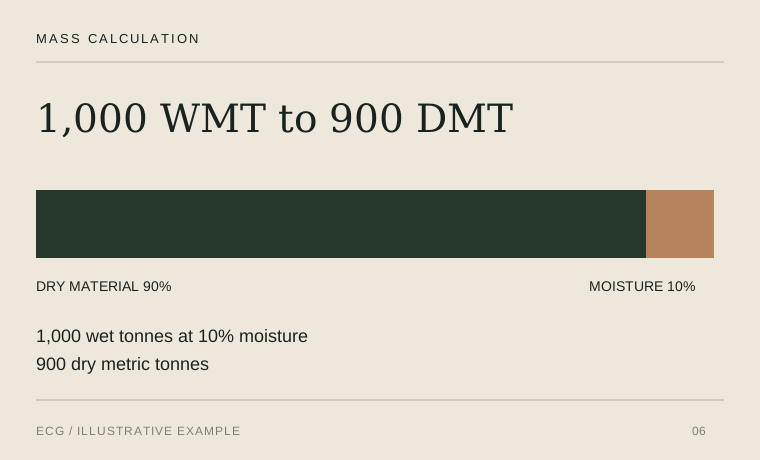
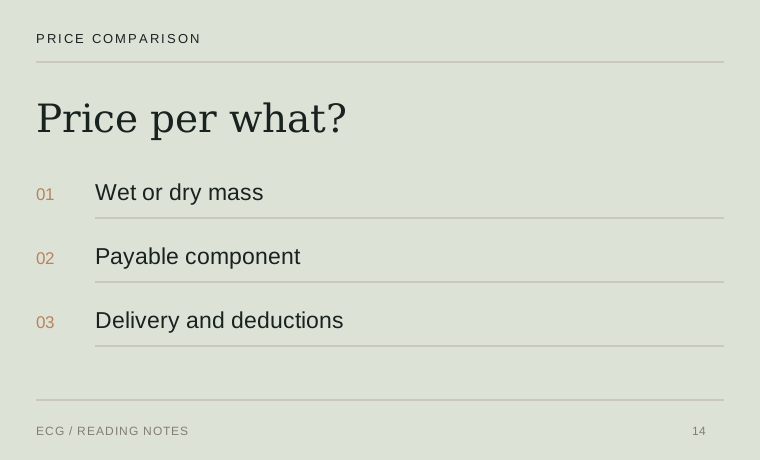
Use consistent units in the model. Keep wet and dry tonnes separate, and label any conversion. Record whether the price applies to gross product mass, a dry mass basis or a contractually defined payable component.
Identify the quality adjustments
Ask which differences lead to rejection and which lead to a price adjustment. Put the formula and applicable thresholds in the commercial agreement; do not leave the receiver’s expectations as an informal conversation.
Show each adjustment separately in the comparison model. Avoid burying quality assumptions inside one unexplained discount percentage. The reviewer should be able to see what changed and why.
Bring the offers to the same delivery point
An offer at a source location cannot be directly compared with one delivered farther along the route without accounting for the differences. List handling, inspection, movement, freight and any other transaction-specific obligations.
The U.S. International Trade Administration explains that Incoterms help allocate obligations, costs and risk in a sale. Use the agreed rule and named place when interpreting an offer, while treating payment and ownership provisions separately. [1]
Model the timing of cash
Record when money leaves and when the expected material or proceeds arrive. Compare that timing with the other offer, including the additional financing cost or payment exposure it creates.
Use actual proposed payment conditions rather than a generic assumption. Keep bank charges, finance costs and contingent costs visible where they are relevant. Have the treatment reviewed by the appropriate financial and legal advisers.
Separate confirmed inputs from estimates
Mark each input as confirmed, indicative or unresolved. Add its source and date. A spreadsheet should not make an unsupported quantity look more reliable simply by displaying several decimal places.
Build a sensitivity view for the inputs that matter most to the comparison. Test changes in moisture, grade, logistics cost and timing where applicable. The purpose is to see whether the preferred offer remains sensible when reasonable assumptions change.
Record the buying recommendation
A compact comparison can include specification fit, evidence quality, landed-cost assumptions, payment exposure and unresolved issues. Do not reduce the decision to an average score that conceals a disqualifying problem.
The right outcome may be to obtain further evidence before negotiating price. Where an unresolved term could change acceptance, payment or delivery, obtain clarification before ranking the offer.
The comparison should end with a recommendation and its conditions: which offer fits the requirement, which figures remain provisional and what must be confirmed before an order. Record the validity date of the quotations so that a later approval does not rely on expired terms.
References
The linked sources support the referenced information. Checklists and review questions are ECG’s editorial suggestions. This article provides general information, not advice on a particular transaction. External references do not imply an affiliation or endorsement.
Preparing a purchase or project enquiry?
The resource page includes templates for buyer requirements, source checks and project introductions.
View the templates